Category Archives: Travel

Cusco II

They say the layout for the old city of Cusco (whose original name was apparently pronounced as kos-ko, which may explain why, when asking for the location of the American embassy in Cusco, natives will direct you to McDonald’s—and by the way, they have chifas too, here at 11,500 feet) is in the shape of a Puma. If you go to your favorite internet “research” sites (read, “easy answer—who cares if sources have any validation” sites), you probably won’t find mention of this; but if you dig a little deeper—i.e. click on something other than the top-ranked wikipedia link in your google search results)—, on other sites (let’s call these “conspiracy theory/whacky academician” sites), you’ll see an aerial view of the city with the superimposed outline of a pre-school-looking figure of an unrecognizable (or possible generic) quadruped. You’d have to reach pretty darn far to draw a puma conclusion on what you see, but then again the Incas probably didn’t have the appropriate aircraft for a fly-over to check the work of their urban planners.

One very cool thing that you’ll see for buildings within the mystery quadruped boundary (and, honestly, probably outside of it, since I am a little skeptical of the claim), is that the lower part of the exterior walls are Inca-laid rock, granite I believe (though all rock pretty much looks the same to me). This is pretty cool, since it means that the foundation of the buildings was retained (though build up with mismatching colonial-looking structures) due to fortitude, aesthetics, and/or engineering—or possibly belief in the puma-like (or whatever) layout. We saw many examples of such hybrid construction close to the cathedral at the center of the old city (and hence, the Monestario hotel, see previous post). Though I have no way of validating the age or the builders of the lower-part of the walls, I can easily accept that they are Inca-age, since the distance between buildings, and thus defining the streets, was barely wide enough to fit our of our little transport mini-buses (which of course leaves a full 3 inches in each side for pedestrians). The right turn to exit the square where our hotel was located was so tight that most drivers required a 5-point turn just to make 90 degrees (though I experienced as many as 7 points, and one studly driver who made it in 3 without even bashing a rim on the curb).

This is all a long-winded lead-in to our visit to Sacsayhuamán (which is pronounced surprising close to “sexy woman”). This means, in Quechua (and presumably, the Inca language) “head of the Puma”. It is outside of town up in the hills to the north, and the main structure (which is built of Incan-style walls and terraces) represents the head in the aerial quadruped outline. Here is a picture of the jagged teeth of the Puma (or whatever):
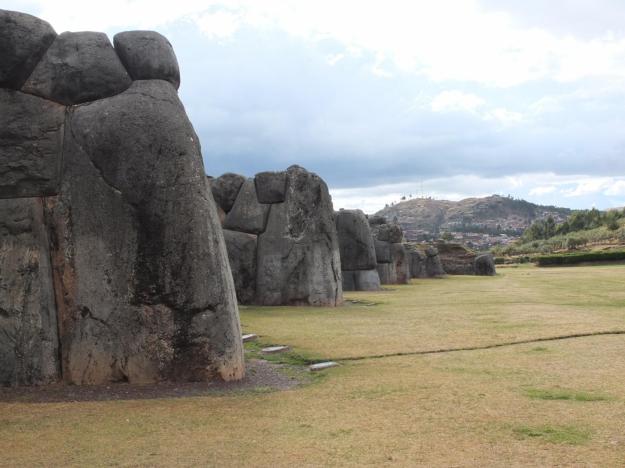
And here’s Mom standing next to one of the large stones representing the caps of the teeth (the Inca were darn good dentists apparently):
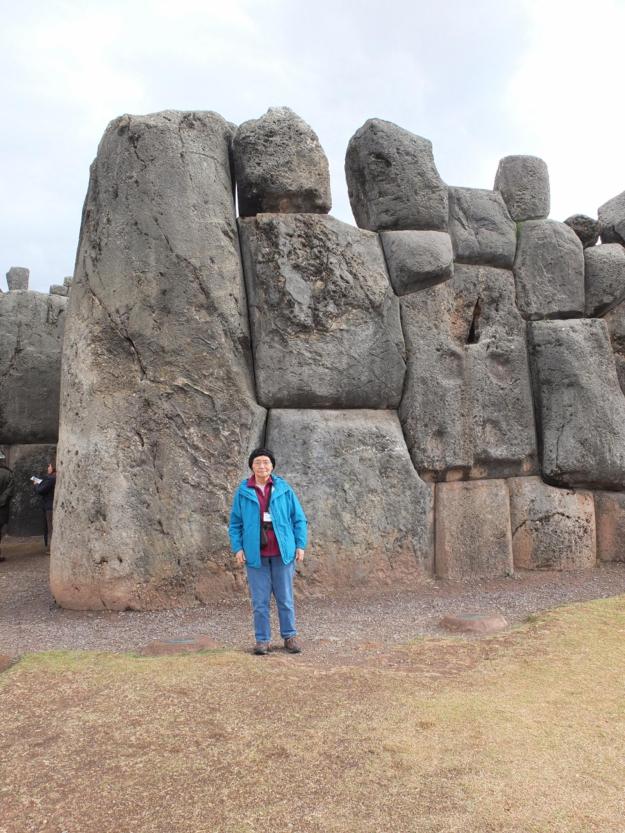
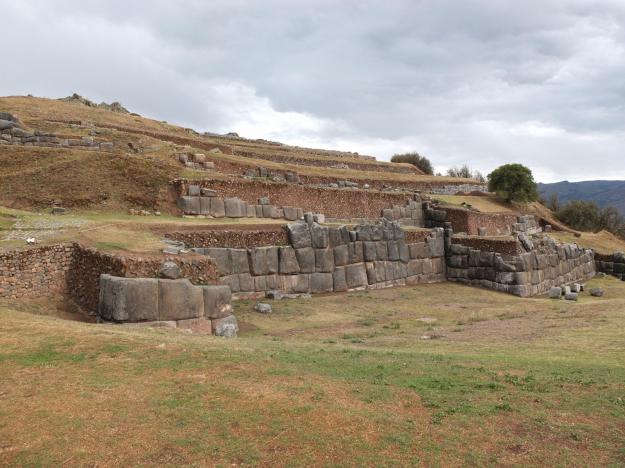
Notice how tight-fitting and awesome the construction in the lower layers is (Incas), and how apathetic and sloppy it is at the top (20th century restoration archaeologists close to—or after, or possibly during—pisco sour happy hour). Here’s a wider shot of the chin section (if you believe in that sort of thing), showing the tiered construction of the head:
And across from the mouth/teeth is another structure of temples, currently under excavation (they didn’t really give us any information about it, so I don’t know what puma-related thing this represents), which looks like this:

The site was pretty spread out, and overall not very much excavated/reconstructed, but interesting and spiritual in its own way, and unfortunately we didn’t get much of a chance to explore. I climbed the main structure a little (to about the upper lip) to get a better view of the overall site, but didn’t see too much more. But driving back down to Cusco from here, this was the view of the city:
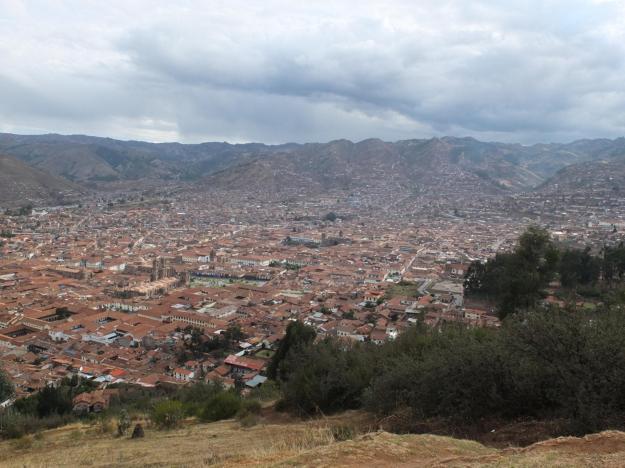
The carpet of red-tile roofs was pretty vast (whoever owns the teja factory, or better yet the controlled the distribution, must have made a killing), though I didn’t see no nothing remotely resembling a puma. So it turns out that this little “base camp” for Machu Picchu is actually a city of 500,000, and former capital of the Incan empire (and contrary to my prior understanding, Machu Picchu was just mountain hamlet in comparison—just shows how little attention I’ve been paying). My other errant belief (alluded to the previous post as a “flaw in my logic”) was that Machu Picchu was a climb up from Cusco; it is actually 3600 feet lower than Cusco. Anyway, let’s not dwell on my ignorance and go on.

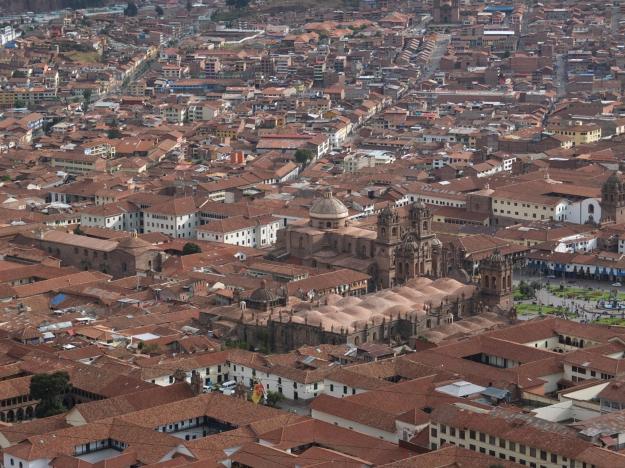
Here’s a shot from the same vantage point, zoomed in on the central cathedral; the Monasterio (our hotel) should be just up and left from center, can anyone spot it (I can’t)?
Back in town, we stopped off to see Koricancha, “Temple of the Sun”, which was an old Inca structure upon which a monastery was built, with the original structure left largely intact. Here’s a shot of some of the original stone, with a glimpse of the Spanish super-imposed structure in the background.
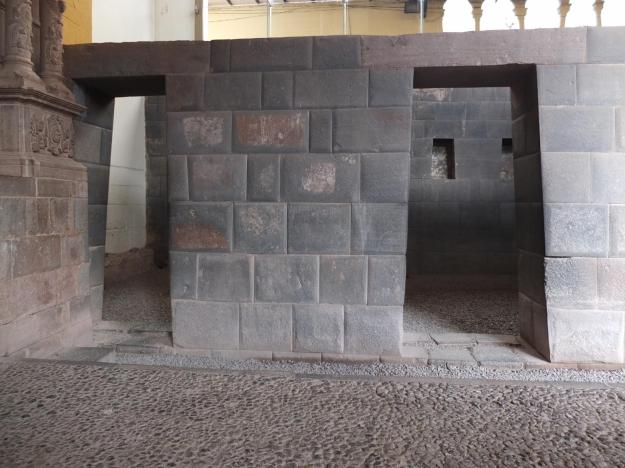
Look at the incredibly fine and precise shaping and joinery. That’s without mortar, folks. And this is a seismically active part of the world. The canted angles in the doorway and the walls (alternately angled in and angled out—you can’t tell from this picture, but the wall facing us is angled away) apparently help the seismic waves “roll” through the structure with (relatively) low stress, along with the lack of a brittle adhesion between the parts. Really amazing. You see these same construction techniques (and design…as in aesthetics!!!) repeated throughout Incan architecture.

Here is one more picture from the site, again showing the skill of the construction.
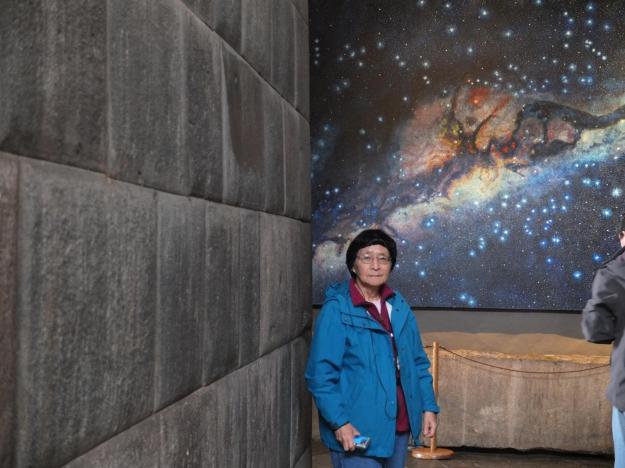
The large poster behind Mom is a modern-day artist’s rendition of how they interpreted the Milky Way. Instead of connecting stars with lines (I mean, seriously, how good a connect-the-dots picture have you ever seen, especially a 6- or 7-point figure, as in your average western constellation?), they saw figures in the dark spaces within the galactic cloud. The images discernable here include a killer ferret squashing a giant ant, while sucking the brains out of ET wearing a tutu; and a star-bellied sneetch holding an AK-47 and doing a swan dive. Do you see them too? Well, either way, the Incas thmhajaought the meaning of life and the universe were contained in those figures.

So we’re actually back from Machu Picchu by now, but I won’t have time to post anything about it until tomorrow or the day after (whichever day of the week that is, I’ve lost track by now). Well, you may be surprised to hear that I only have 4 photos of Machu Picchu itself, I’ll explain later in the post.
Lima and Cusco

This will be a relatively dull entry (or is that not a good way to start a piece of writing?), covering our journey from Guatemala to Cusco, the “base camp” for our ascent up to Machu Picchu (can anyone spot the flaw in my logic here?).

No offense to Lima, but I’m not going to say much about it, since it was just a layover for us (on the ground for less than 18 hours, and 6 of those were spent sleeping, and another 2 were at the airport). Actually, the less I say, probably the better, since Lima may not have been showing its best face (or perhaps it was, in which case I should just stop now).

The good: the airport was modern and clean, our hotel (the Miraflores Park) was outstanding, and we saw (or rather sprinted through) a pretty impressive museum of pre-columbian artifacts (Museo Larco Herrera).

The bad: huge, ugly, prominent cell towers every few blocks, lots of abandoned-looking buildings (horrible if actually abandoned, worst if not), and dreary weather.

The ugly: the erotic artifact collection at the Museo Larco.

The unexpected [bonus section]: chifas, chifas, everywhere (explained below), and the earthquake(?).

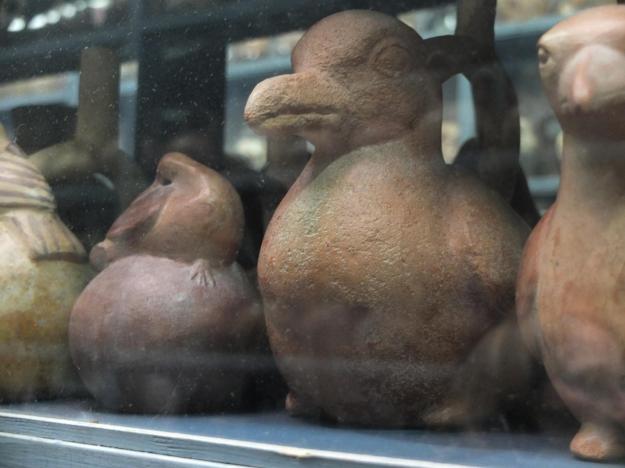
Here is an interesting artifact from the Larco:

This is from the “visible storage” section of the museum, there were floor to ceiling shelves of such artifacts, row upon row, room after room. Very impressive. Tens of thousands of vases and figures, etc. Here is evidence that Angry Birds was stolen from pre-columbian indigenous people (they were too principled to patent it, and now look what happened to them):

From the rotating formal display, here was my favorite dude (have no idea who he was, and why he looks so pathetic [talk about knobby knees!], since we were sprinting through the exhibits so fast).

Forgot to mention in the intro another “good”: trayfuls of pisco sours everywhere you turn. We had them at the museum, then again at the hotel for dinner (and again today in Cusco). Was only offered a Chinese soup spool with about 2 grams-worth of ceviche at the museum (and none seen since)—and it wasn’t even that good, WTF? Is there a shortage?

That night at dinner (nice meal with typical Peruvian cuisine), up in the 11th floor glass “Observatory” room, we ended up at an all MIT table (okay, almost all—also had a golf-travel trip designer, you gotta have one of those). The lone remaining Techie spurned us in favor of a courtship opportunity (it seems)—come on, fellow engineer, goo-goo eyes instead of stimulating tech talk about the physics of catenaries and the like??? By the way, there was an earthquake while we were hanging out after dinner (probably around 8:30 or 9:00, that would have been November 3). I poked around for it on the internet for a few minutes and was not able to find references, but perhaps my Spanish googling skills at www.google.com.pe leave something to be desired.

Oops, I’ve gone over my word limit for Lima, I’ll tell about chifas and the erotic wing of the museum in comments later, if there is interest.

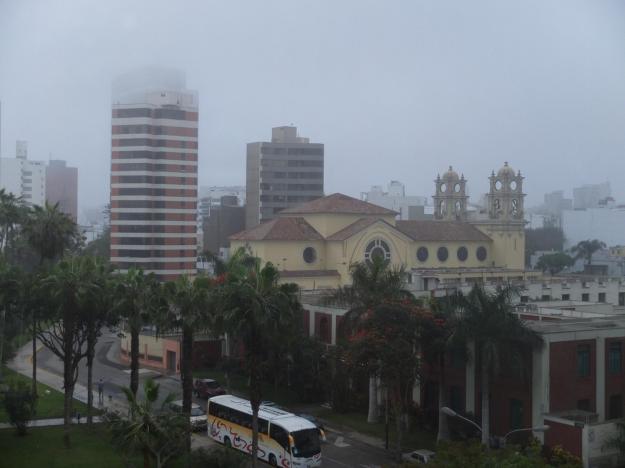
Here is the view from our hotel room window (which faced the ocean—this was shooting off to the side) in the morning. They actually say this was a very typical Lima morning (noon and night, as well), poor Lima-ites (Limanians?).

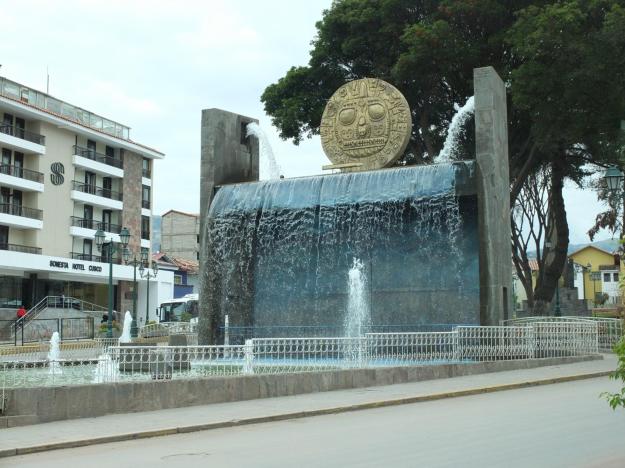
Landed in Cusco, here is a picture of a fountain on a well-known boulevard on the way to the hotel from the airport—this is to show off the time-stopping power of my new camera, but also because I thought the name was unexpected, Calle Francisco Bolognesi (though just because you can morph “Bolognese” to “Bolognesi”, doesn’t mean you’re allowed to turn “jiŭ jiā” into “chifa”—there’s a hint for you on the chifa thing).

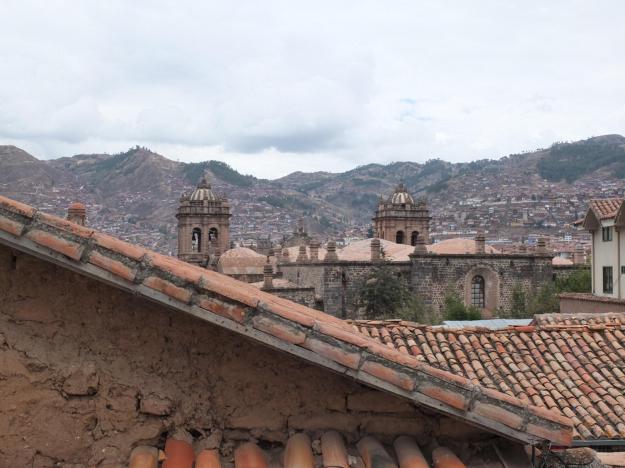
Our hotel is a converted monastery, very excellent, the finest hotel in all of Cusco (but then again, the Bridge of San Luis Rey was the finest bridge in all of Peru, and look what happened to it). Here’s the view from our window (that’s the back of the main cathedral):

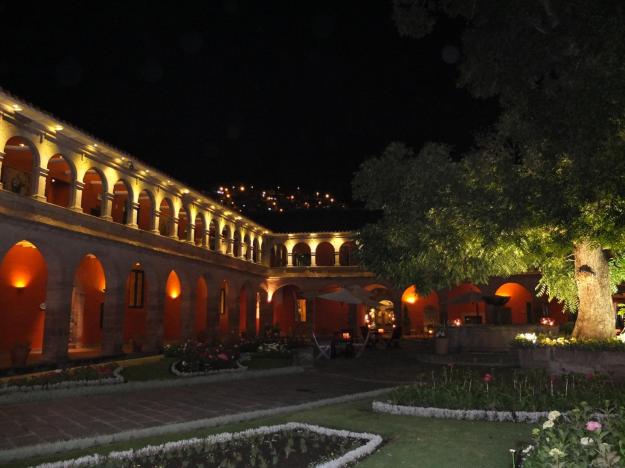
And here are a couple of shots at night:

I have to defer the remainder of my Cusco posting until later, since it’s getting late, and we’re getting up early (again) for breakfast before heading up [sic] to Machu Picchu. Sorry, folks.

Tikal (Redux)

One of my favorite remembrances from my travels in Central America in 1990 (during my questing, itinerant years—I’m much more domesticated now), was my journey to Tikal. Notice that I said “journey to” rather than “visit to”, but actually my visit to Tikal was also memorable—I just wish I could remember more of it (no camera, no blog—the only vestiges, a rusty brain and a notebook of letters written in an indecipherable hand, which will likely never be decoded). The strongest single memory that I have is of sneaking back into the park after dusk (after paying off a guard, is how I recollect it) with a couple of fellow travelers, and scrambling up one of the tallest temples (which I now believe is Temple IV), climbing up two or three stories though tunnels and ladders within the temple edifice, and ending up on top of the “comb” of the temple. From there we watched the end of the sunset, and the jungle below darkening and falling away into an amorphous canopy—not an artificial light to be seen in any direction. The darkness, then, arousing new life within the jungle, as the grunts and howls and hoots of monkeys and other night animals emanated from the tangle of trees, and the faintest steely blue of the sky stopped in time on the horizon, eventually fading into the starry field above. The ageless spirit shadows of the jungle enveloped us, and we sat silent and still and transfixed for hours, stationed between the teaming trees and the heavens, one with the narrative of the earth and the echo of the Mayas, before finally climbing down and sneaking back out of the park and into the campground.

Or as Ernest Hemingway would have said, “We were in the jungle to see the place. It became dark. And there were monkeys.”

Okay, enough from the Way Back Machine (I’ll say something about the amenity and wonder and thrill of the journey to Tikal, and then the tragedy, in a later post), and now on to (not “onto”) the Very Recent Past Machine…let’s dial it back to yesterday. Had a great guatemalteco breakfast, with chilaquiles and black beans and rice and queso fresco and thick fluffy Guatemala-style corn tortillas, hot off the kamal. Awesome. Then on to Tikal.

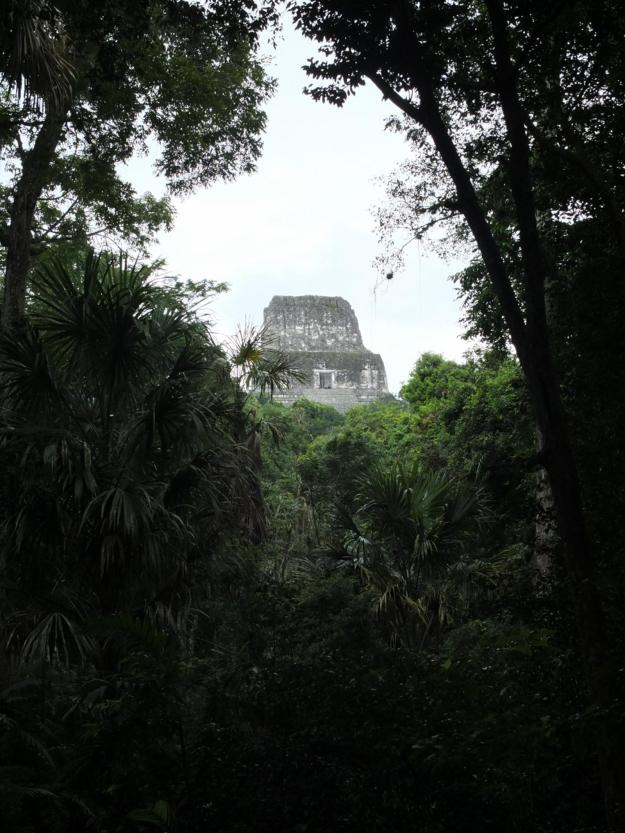
I didn’t want to dwell too much on the past versus the present—I wanted to experience the site afresh, with a new understanding of the history and the architecture and the culture, thanks to our generally excellent local guides. Our guide for the “slow group” was Jeovanni: low-key, knowledgeable, and super-accommodating. We got a special exemption to have the shuttle bus take us to the other side of the park, so we only had to do a one-way walk. We stopped on our way to Temple IV, and this is what we saw:

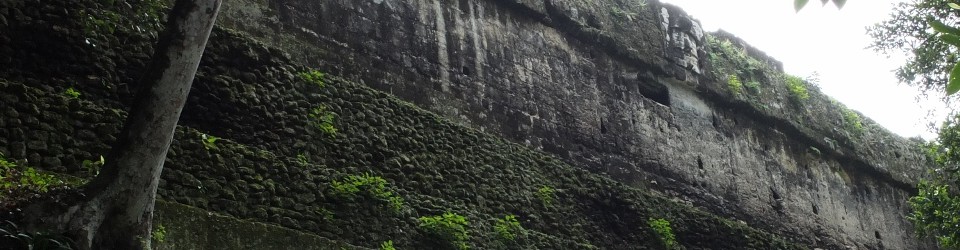
Note that the base of this shot does not even reach the ground. This is the largest temple on the site, 70 meters high, and a stunning monument rising out of the jungle. The bottom two-thirds of the pyramid [sic—it’s technically not a pyramid; they have stairs on the corners, not the sides] has not even been excavated. It was the top of this temple seen by a chiclero, who then told the governor of the region, so the story goes. Needless to say, a picture can’t do the sight justice.

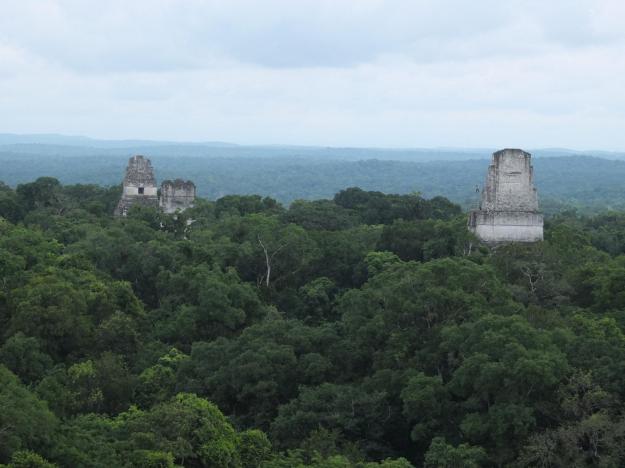
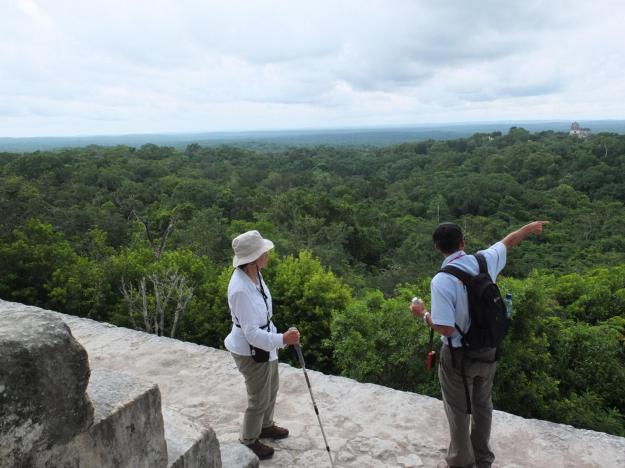
Neither can it capture the experience of the view from the top (look familiar, Star Wars fans?):

Or zooming in a little at Temples III, II, and I (respectively, nearest to farthest in the line of the Great Plaza):

Here’s Mom (who, again made it up the zillion steps to get to somewhere worth getting to, without much difficulty), with Jeovanni up at the temple edifice (remember that first shot above, to get an idea of what kind of doozy a misstep up there would be):

And there were others in our group, for whom (who?) the climb was a substantial physical challenge, who really gutted it out and were rewarded, and who (whom?) I profoundly applaud for their determination and unmitigated tenacity. I don’t want to get too teary-eyed here, but this trip, and this effort within the trip are incredible commitments for those who don’t get around so well anymore. Once back on the ground, after a careful descent of the stairs, we sat for a drink (de agua) with those few in the group who were not able to make the climb. Hearing of the magnificence at the top was tough on them—their sole bittersweet consolation, the pictures that Jeovanni snapped for them from the top with their cameras.

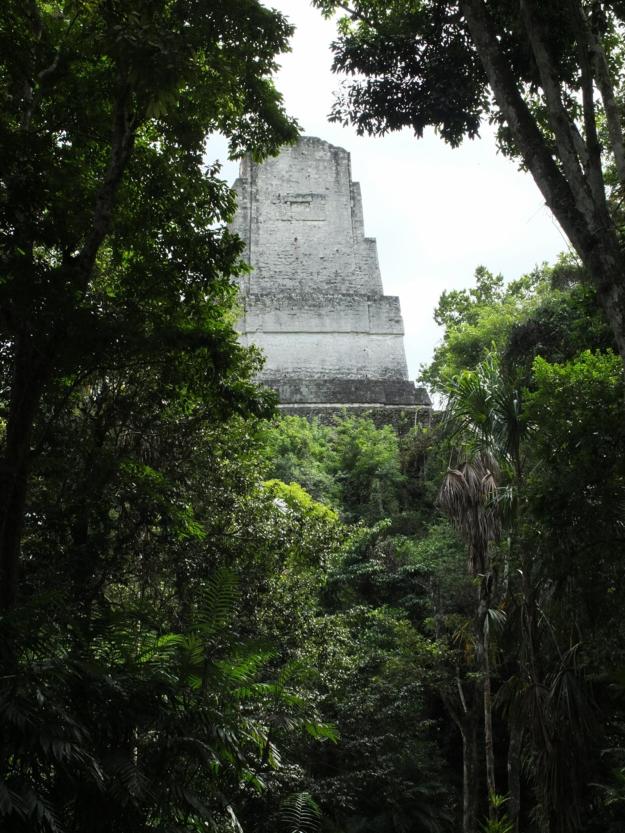
The walk back toward Temple III and the Grand Plaza behind it was a short trek through an up-and-down path cut through the jungle, which then met up with the road that we came in on. I was gratified to see those who had not climbed, take on their challenge of the jungle route, and test their own limits of perseverance. Here is the back of Temple III as we approached it:

Note that it is somewhat stupid of me to post essentially the same pictures that have been taken and published countless times by others—them with better equipment and artistic eye and shooting conditions, etc. But, obviously I’m not competing with them. These photos serve as testament not just of where we were and what we did, but rather of how we did it. By the sequence of the shots, they show us the order in which we did things, and in some cases, the pacing as well. By the composition of the shots, they show us what our eyes and minds and consciences were drawn to. And by the faces and the postures that are sometimes captured, they show us the spontaneous emotions produced by the experience.

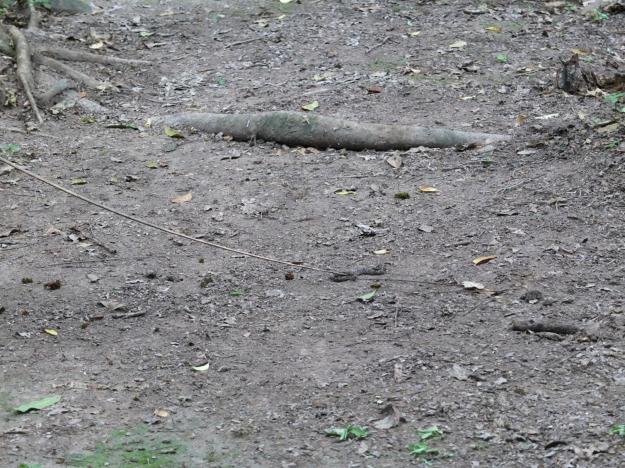
A couple of obligatory wildlife shots.  Here’s a baby fer-de-lance that a park worker swept out of the underbrush as he was cleaning around a path (that’s him prodding it with the blade of a palm frond, trying to get it in a more photogenic position—either that, or trying to get it to leap at our throats):

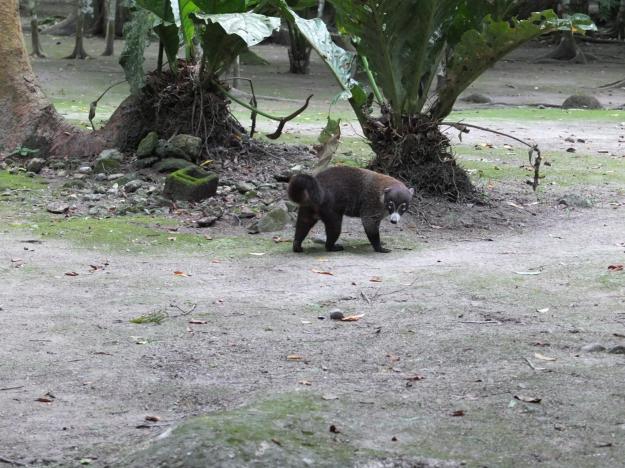
And here’s a pizote (also known as a koatymundi) hanging out near the refreshment palapa, outside of the Great Plaza, basically just a more docile, but no less objectionable, cousin of the North American raccoon (I didn’t care much for his manners, freakin’ groveler, or his looks for that matter):

Here are some shots from the Great Plaza. I’ll present them with little commentary, since it’s after my bedtime and we have to get up early tomorrow for departure to Cusco (we’re already in Lima, I’ll talk a little about that tomorrow).

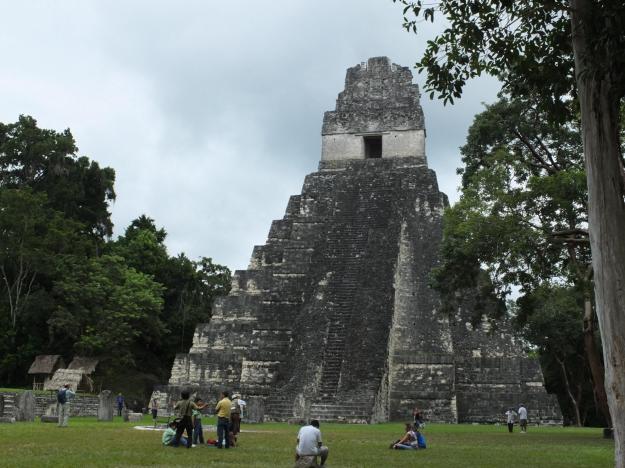
Temple I:

Mom in front of the Central Acropolis (off of the Great Plaza):

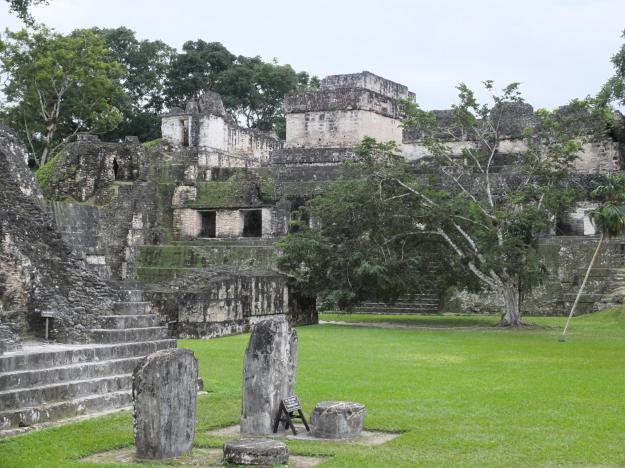
Different view of the same structure, look how awesomely architectural this is (“Architectural, duh, it’s a building, dude!”  “Yeah, but this could seriously be like 13-Jaguar Lloyd Wright”):

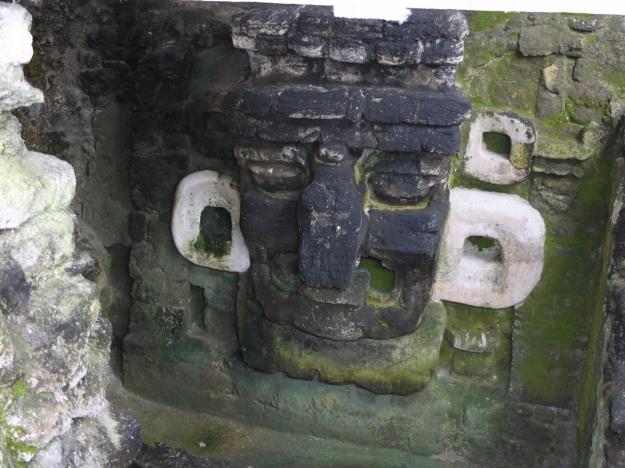
This extreme looker with the earrings is the rain god, Chaac, who was discovered in a well, completely intact, when Temple 33 on the North Acropolis collapsed during restoration (“Where’s that damned temple I asked you to restore? […]  What do you mean you have something better?  […]  Yeah right, sure you meant to do that!”):

Artistic view of Temple I from the Central Acropolis, framed by beautiful tree branch (okay, maybe I am trying to compete—me with my snazzy new camera and all):

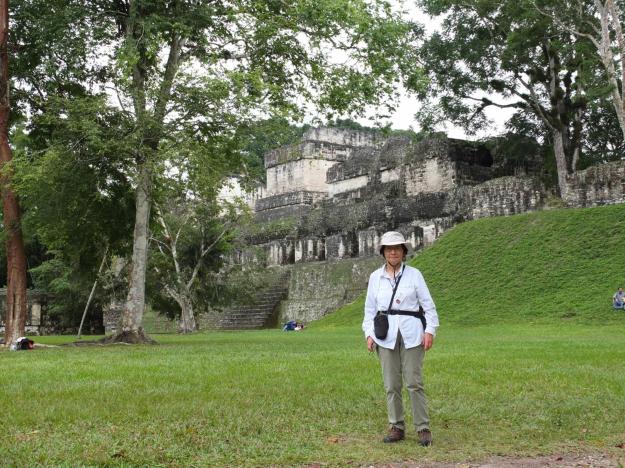
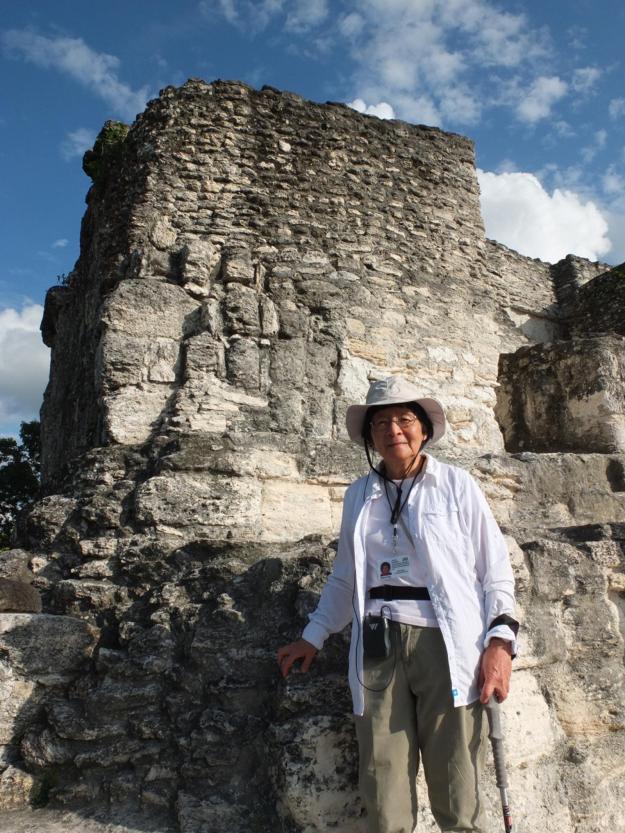
And lastly, a shot from the Central Acropolis of Mom (in the white shirt)…oh yeah, and there’s a 1300 year-old Mayan temple (Temple II) in the background.

Adios.

On a Jet Plane (and where we landed)

So, we’re on the plane, and it’s unbelievably comfortable and fun. Here’s a picture:

The attendant calls the plane “Expedition” I think, but that’s so banal and dull. The pilot (or “lead captain” as he likes to be known as), Jon, calls it “Gulf Delta Zulu Zulu <something> <something> <something else>”, which seems far more endearing to me. I’ll have to pick up the true correct name from the lead captain (or one of the lesser captains, if need be), in its full poesy, when we board next in a couple of days, and post it here properly.

Regardless, all of the things that make air travel a hassle (at least for us wretched refuse who sit in coach), have magically dissolved. Very spacious seating, with a swing up leg and foot rest (which Mom loves), noise-canceling headphones, hand-and-foot wait service (crazy polite and attentive, with a British accent and typical charm), warm towels every half hour, and wine with every meal.

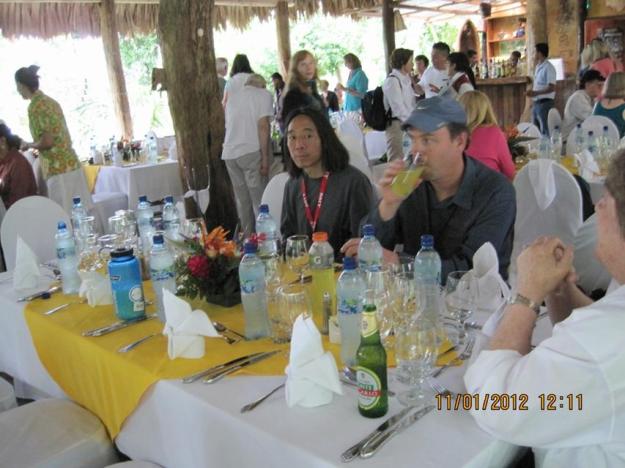
Speaking of meals, there are four on the agenda for today, apparently brunch isn’t just for Sundays anymore, it also seems to be standard for private jet travel (though I have very few data points on this). At first glance, it would seem rather excessive to serve brunch on a 3 hour flight that takes off shortly after breakfast, just so we can land and take a bus out to a Maya ruin “eco-lodge” to have lunch. But on further inspection, there appears to be method behind the madness, more than a mere blatant display of extravagance. It turns out that we’re shifting two timezones west today, so clearly that opens up not just the opportunity—but the need—for the extra meal. I mean, we can’t have the group starving by the time lunch rolls around in the new locale, what with breakfast having been a whole continent in the past. Here’s me at lunch looking askance at Cameron, our physician for the trip (perhaps questioning the performance-enhancing effects of the Guatemalan Gatorade he’s drinking).

Anyway, after lunch, we went to ruins of the classic period city of Yaxhá, which is within artillery range of Tikal, and on the other side of the Mayan mason-dixon line. Interestingly, having been to Tikal and other Mayan sites during a seminal exploration of my place in the world (a little over <cough> twenty years ago), and having taken the experience very personally, and having known of other major Tikal foe kingdoms in the lowland region—such as Caracol (edit: removed the accent, after having gotten back on line and consult the trusty old internet)—, I somehow had never heard of Yaxhá before. Great site, great history, and great park. It was very tranquil (at least mostly, as I’ll tell about in a minute) and beautiful, with totally few visitors, but really expertly excavated (though only partially) and wonderfully presented, with many many of the buildings swallowed by the jungle left undisturbed, though clearly fulfilling the mandatory cardinal direction plaza layout. You can look up the story of the site on Wikipedia (or go to your local library and leaf through the card catalog), but one of the most interesting factoids was some sort of alliance with the Teotihuacanos, from way up north. Apparently, they were brutal fighters who lent their swords to the Yaxhá-ites, and a surprising legacy of the arrangement are the surviving stelae (edit: spelling confirmed; note that I prefer “stela” as the singular, instead of the more commonly suggested “stele”, since there is better accordance with the spelling of the plural) depicting Teotihuacano figures, head-on (rather than from the side, or flattened like corn, if you know where that reference comes from), with lance, shield, and up-north warrior sandals (which totally don’t go with normal Mayan garb and headgear).

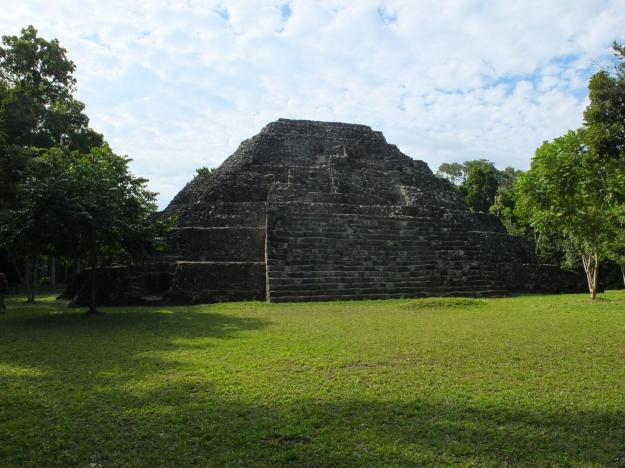
Here are pictures from the site, starting with an astrological pyramid near the entrance of the park:

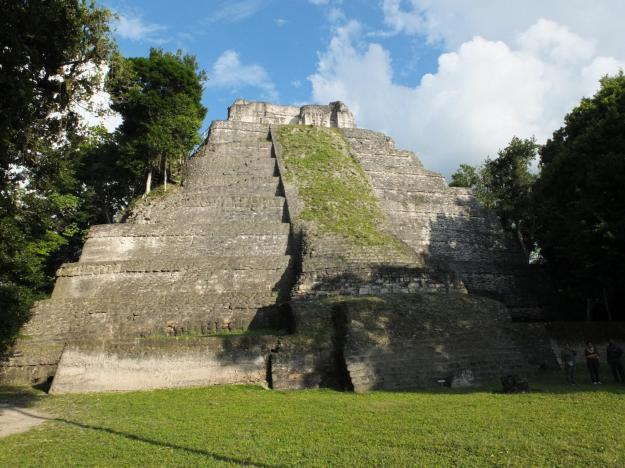
Followed by the amazing temple, at the highest point within the site:

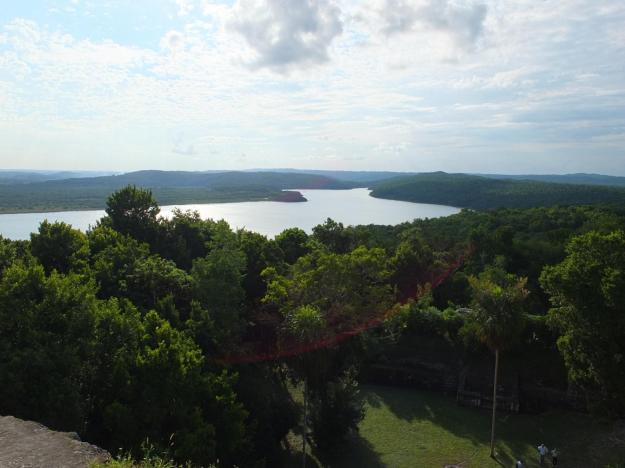
Everything about this monument was pretty stunning, from the design and aesthetics to the engineering to the level of preservation (supplemented by some fairly aggressive reconstruction, I’m sure)…and, oh by the way, the view from the top wasn’t too bad either (pardon the spherical aberation):

You could actually see the entire site, including some of the other major pyramids (if you looked down on them!!!). Mom had no difficulty in making the climb to the top—all of the stair climbing and treadmilling (or milltreading?) at Mirabella is clearly paying off.

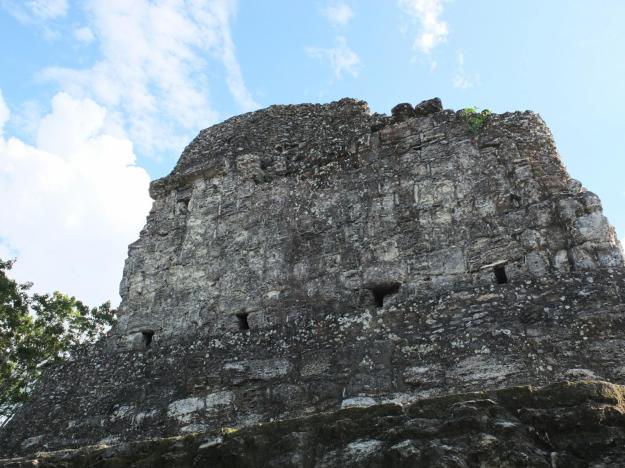
One last note of interest on this pyramid/temple has to do with its color. Sure, it might look like just a pile of weather- and time-worn limestone to you, but in its day, it was a rich red ochre, so the artist renditions at the park—as well as our super-awesome guide Billy—tell us. But just as we were headed down, I took one final look at the dark side of the temple, and I could swear I saw traces of red fused into the stone. Here’s what the camera was able to capture, I don’t know, what do you think?

Then again, it could be just the blood from a howler monkey knife fight last week. Speaking of howler monkeys (nice segue, huh?), they were going absolutely apeshit in the trees during our visit to the park, if you don’t mind the pun (which is even punnier than you think, since a member of our group [who shall remain nameless, since it is better for all to forget the incident—don’t worry, it wasn’t one of us] was actually nailed on the top of the head by some falling…well, you know). Getting back to the zero-th meaning of “apeshit” (for those C programmers among you), it was like the Jets and the Sharks (to avoid making reference to gangs that could actually shoot me now over a mere joke—and no, this is not about hockey!) up in the canopy, absolutely aggressive and antagonistic and raucous and territorial (ostensibly, but maybe they just like to shoot up the neighborhood).

One other modern-day-urban-inner-city-plight/Mayan-plight parallel (you know, one of those), then it’s off to bed before Tikal tomorrow. When Billy was talking about the significance of the stelae and temples that each new ruler or conqueror in the Mayan world chose to destroy/deface or preserve, the thing that came to mind immediately was inner city tagging wars (that’s graffiti wars, for you suburban or country folk). As he talked about more and more examples of both destruction and preservation, the association only deepened. Wonder how those Yaxhá bangers, along with their Teotihuacano gangsta assassins, would fare on the streets of LA today. Buenas noches.

Orlando and Sandy

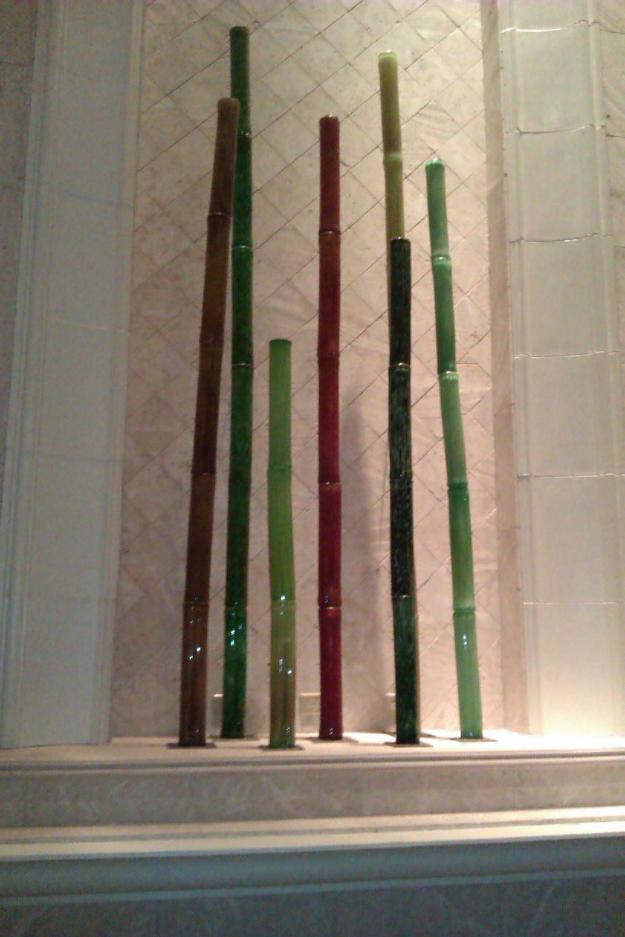
Quick update before we start the trip for real tomorrow. Got into Orlando around a quarter to six yesterday (Tuesday, the 30th), there was a limo driver with a sign waiting for us outside of security, very swanky. Had a nice dinner at Citron, the “American Brasserie” in the JW Marriott—we’re actually staying at the Ritz-Carlton next door, they said we were underdressed for their restaurants (just joking…Norman’s had a special function, and the steak place was of no interest to us). The food was nice and fresh and very well-executed: had a beautifully tasteful salad of frisée, bacon, apple, and goat cheese over a squash puree with just the lightest of dressing, and a tender arctic char with awesomely crisp skin on a bed of faro risotto. Frankly, it kind of caught us off-guard, we were not expecting so good for merely resort food, kudos to Marriott. Here is a picture of an art glass bamboo installation in the “JW” (as we like to call it) on our walk back to the Ritz after dinner—striking both for the glass coloration and mottling, as well as the characterful sculpting of the stalks (justice not properly done by my crappy phone camera):

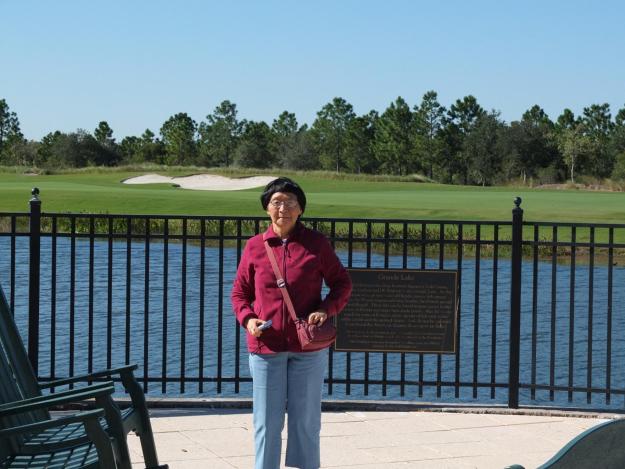
Today (Wednesday) was just a lounging-around day before the reception and kick-off dinner for the trip. After breakfast, we took a walk along the waterway in back of the resort. Here’s a picture of Mom, with the golf course across the water (sorry, no Instagram).

It was actually only about 65 degrees around then, never got above 70 or so today, though it was sunny and nice out. All of the locals were complaining of the cold weather, don’t know if it was due to after-effects from the hurricane.

Speaking of hurricanes, this trip had been shaping up eerily like our planned trip to New York last year, which was canceled by Hurricane Irene. Mom heard about Sandy like a week before our departure and was fearing the worst kind of déjà vu, only more expensive this time. I looked at the weather maps and assured her that the hurricane would pass by Florida three or four days before we flew, so there was probably no worry there. But on further ponderation, after the trajectory of the storm became more apparently, it hit me that maybe the expedition crew and experts and other guests coming in from the northeast may be thwarted in the same way we were last year, and that would put a damper on the trip, if not severely cripple it. I actually called the travel company (TCS) on Monday to see if they could tell us how things were tracking for the trip, and was relieved to hear that they had a total handle on things. All experts and staff and just about every guest routed or re-routed as needed (only one couple from New York, an uncertainty). As it turns out, there was actually a couple that we met at the reception who said that they actually drove down from Philly once they realized that all flights down were going to be canceled, thus spitting in the eye of the storm (so to speak).

The reception and dinner tonight were nice, it seemed like more than the sixty something people (that’s number, as well as age, haha) that were supposed to be there, but I think that was due to generally lively interaction and overall energy. Had some very nice dinnertime conversation with a variety of folks. Tomorrow we get up early for breakfast and a flight to Guatemala. Any questions?

Edit: by the way, I know that “fearing the worst kind of déjà vu” doesn’t really make sense, you either have it or you don’t; I should have said that she was “fearing the worse kind of groundhog day” or something like that [told you I couldn’t stop editing]