
A few years ago, I was talking to my friend Skip about a guy at work who represented himself as an authority on cars and computing (two topics that will always get Skip’s attention). I said something like, “Todd [not his real name] told me blah blah blah [something or another about cars and/or computing]”. Skip, who has a scary-sharp wit (both finely pointed, and with dangerous cutting ability), responded, “Well, Todd is full of—[dramatic pause]…information”. Brutal! (For you kids out there, that’s like old-school for “lol” in this context, but better.)
Thus, I feel I need to make clear that I absolutely do not claim to represent any kind of authoritative knowledge or definitive interpretation of the art and artists introduced and discussed in these pages. And as I have previously said, I actually don’t actively seek that knowledge or interpretation (which collectively, can be considered the mysterious “understanding”, alluded to in the past). These are not postings about—[dramatic pause]…information; I am not full of it. Rather, these are expositions of my personal feelings and responses and ruminations on these subjects related to art. To me, that’s what art should be about.
Some people who know me would say that I do obsessive information(!!!)-hoarding on various topics. I would beg to differ (for the most part, at least). Yes, I dig deep on certain areas of interest, though it is never for the sake of filling myself with information(!!!). But a lot of the time, I just find myself within a confluence of activities and persuasions that catalyze into discoveries and insights.
After I am introduced to someone, or meet them for the first time, I don’t then immediately follow up by checking them out on social media (if you look up my Facebook page, you will find a testament to this), and I don’t call to grill their parents on how or where they were conceived or born, and what they were like growing up as kids. I try and get to know them for who they are, through the continuing interactions that our relationship is built on.
The same goes for art, and their artists. What I learn or come to believe, either actively or passively, is purely a consequence of following or just gravitating toward intellectual or aesthetic or emotional intrigues and compulsions (and for art, “intellectual” is the least important of the three). For me, there actually is no driving motivation, there is no defined objective, there is no identifiable endpoint. The quest proceeds on its own terms. Sometimes there is a rush of understanding (which could be through getting to know their siblings or childhood friends or neighbors, for instance). Sometimes the understanding stalls. Sometimes the understanding stews and develops, leading to new avenues of exploration, or upending other understandings and forcing a wide-spread reconsideration.
So, in discussing the works of Raphael Fodde (or later, other artists), I present no answers. Don’t look for them here.* Instead, I present reflections and speculations. I present some facts, but I probably also present some fallacies (so, please excuse me). I present some understandings, but I’m sure I also present some misunderstandings (a human prerogative). And there are countless things not presented here that I don’t know (just yet, in some cases), or that I don’t happen to—or care to—share.
How’s that for fine print?
Okay, onto the art.
Here are two series of prints by Raphael Fodde that I feel are truly special. In view of the sideways disclaimer above, I will say relatively little about them. Contrary to other possible presentations of the works (and to be real!), I will tell you that I believe the pictures here will not speak for themselves. They can only offer you a glimpse at several powerful and finely crafted works, which you will then have to use your contextual understanding and imagination to extend into an artistic experience and impact (until you can come see them for yourself). My purpose here is to show you additional depths of Raphael Fodde’s expressive means and printmaking skills.
The first set, entitled “The Disaster of War”, captures his reaction to the suffering caused by the recent wars in Iraq and Afghanistan. The technique is chine-collé (etching imprinted on fine tissue, which is pressed into beautiful, laid Magnani paper), and the platemarks are only three inches on each side (even mounted and framed, the works are only 11 by 13.5 inches).
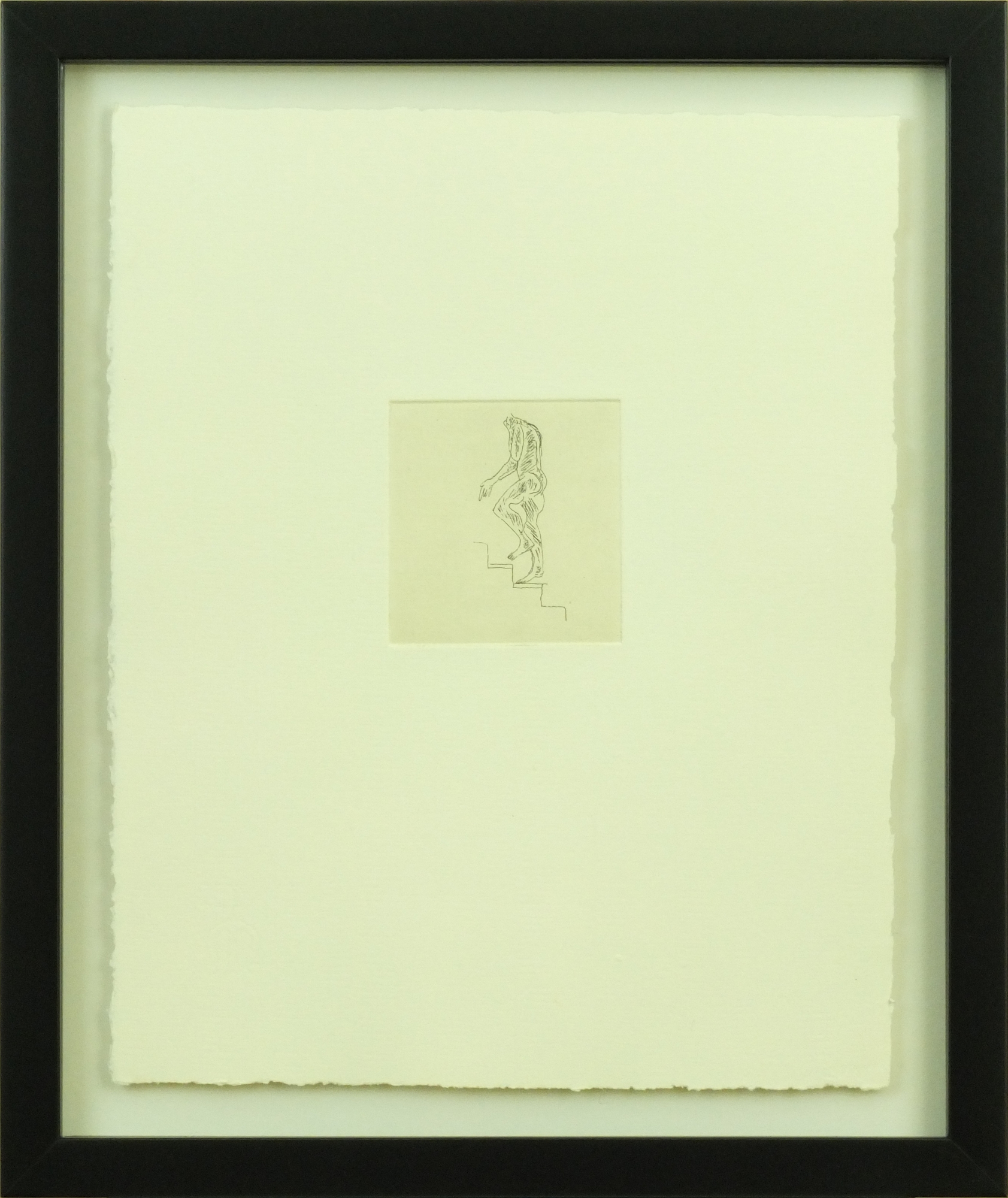
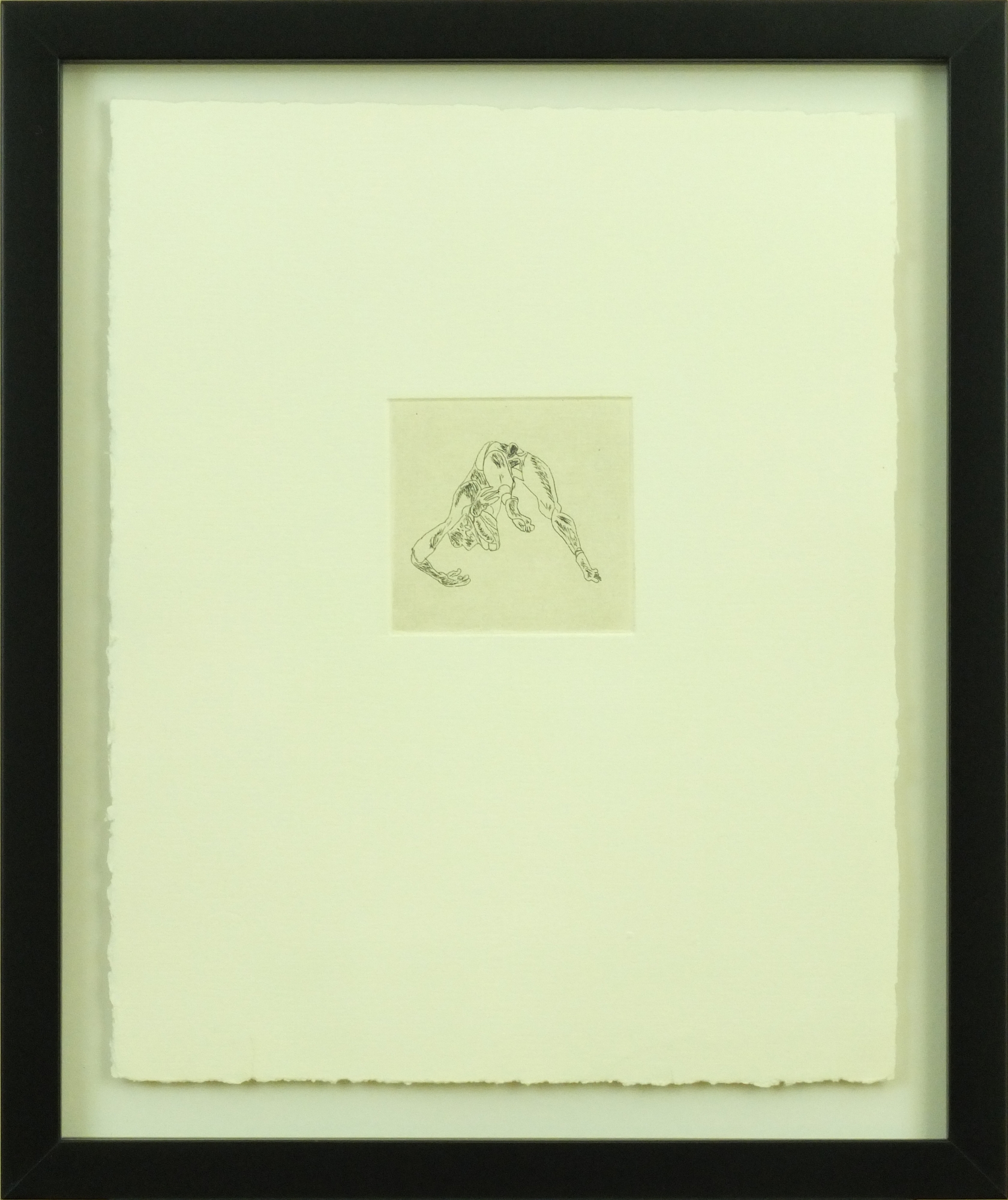
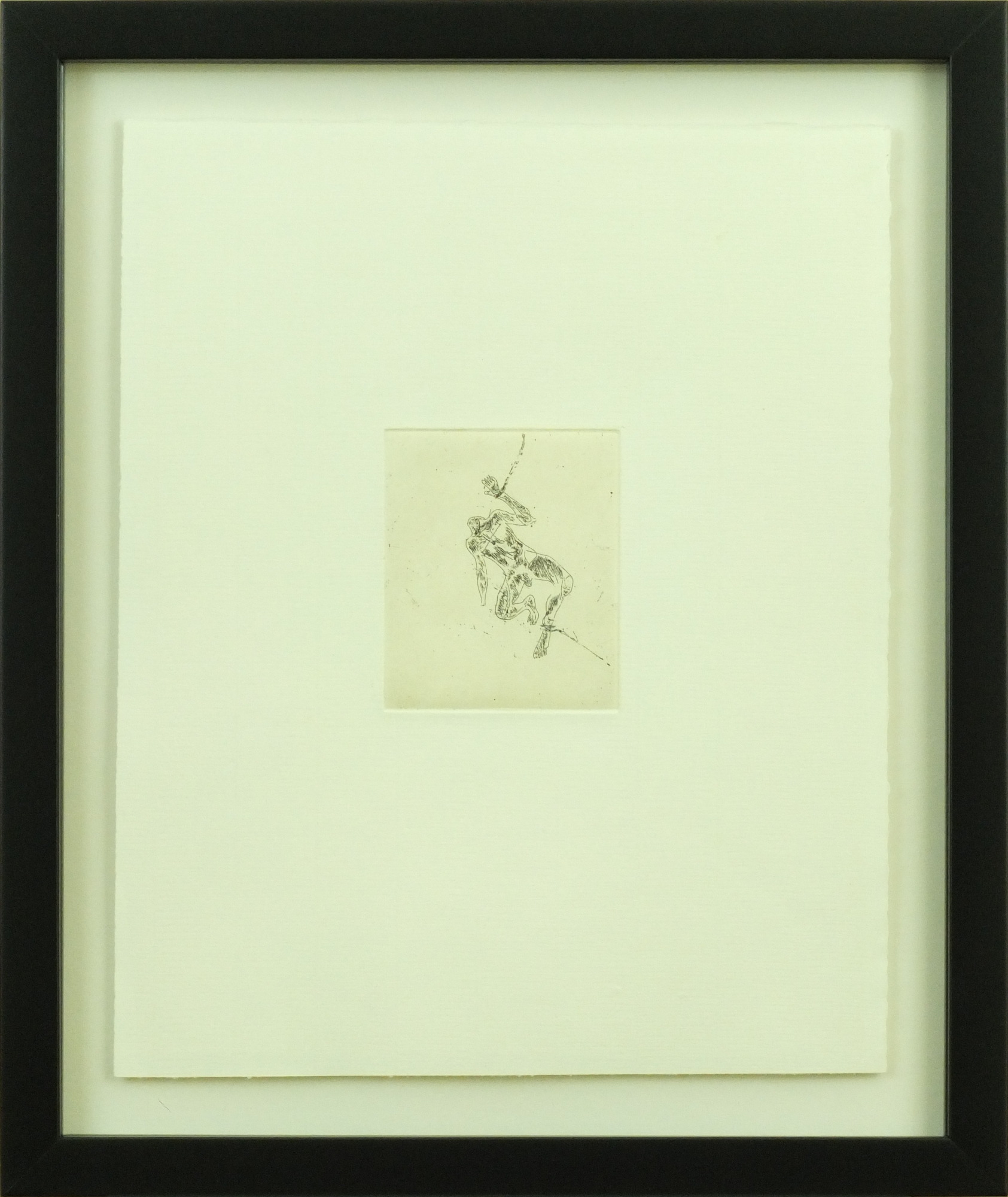
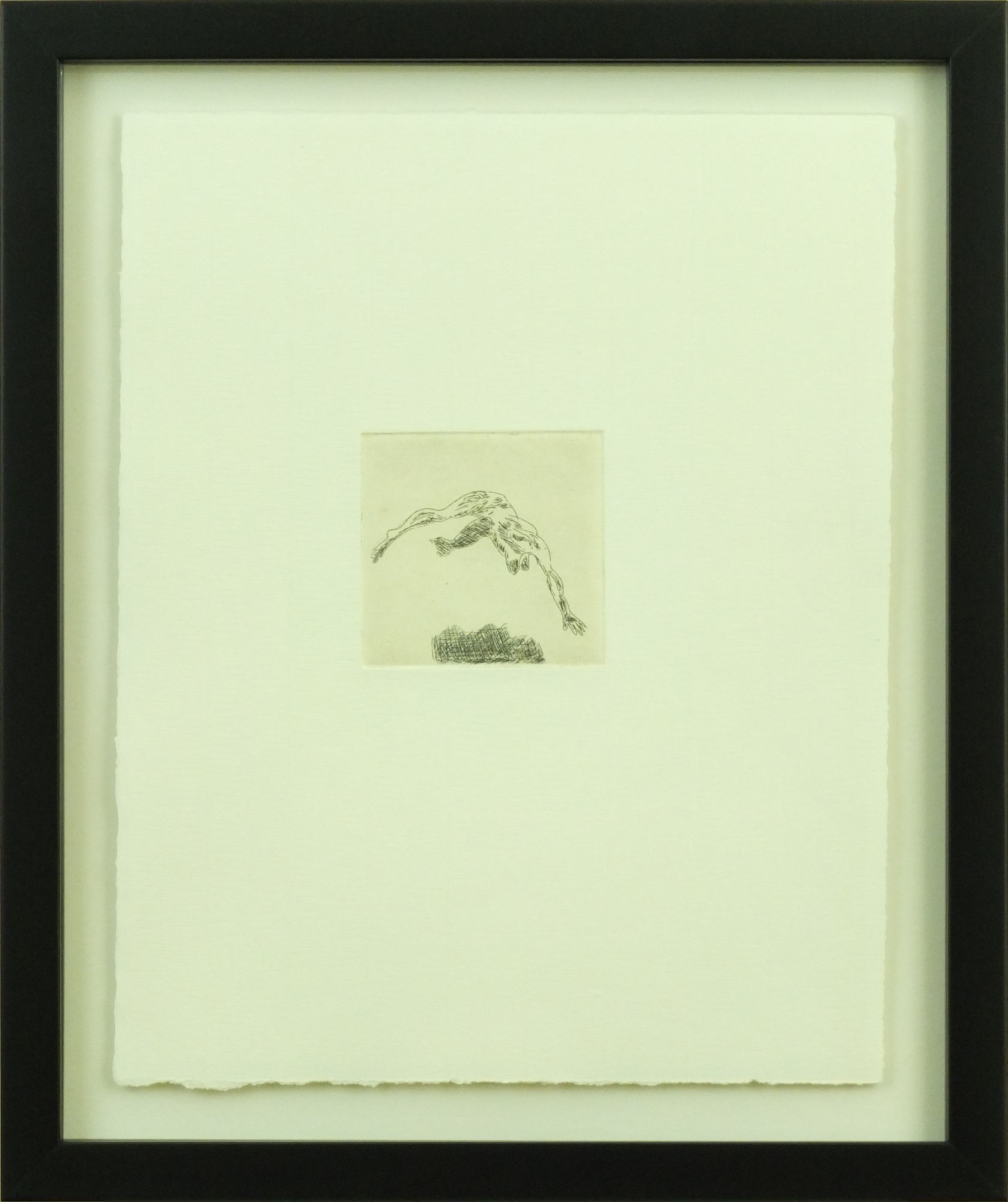
This is from my email response to Raphael after seeing them upon receipt:
The war series is very moving, the figures are debased, dehumanized (faceless and headless), tortured, and utterly powerless. […] the small size is a powerful mechanism, you don’t really see the flesh and muscles and the degree of suffering until you get close, and then it hits you hard. The chine-collé is very fine and wonderful, you are a real master.
The tissue is so thin that you can see every textured detail of the handmade paper it is mounted on, and it sets the sad images on a grim pall. Three of the figures are either bound or discarded and destined for oblivion, but the figure walking up stairs is defiant, even in death. These will hang in my library (recently converted from an unused bedroom), initially in the artist’s numbered order (presented here). But I suspect that different arrangements of the images will evoke their own narratives and resulting emotions, which I may come to experience, and get to know and think about, over time.
The second set is entitled “Paradiso”, and is owned by my friend Celeste (who I thank for letting me share them here). These are drypoints printed from different states of the same plate. There is a background layer of lighter lines, over which the foreground lines are etched.** To put the works into size perspective, the sheets are just under 9 by 13.5 inches.
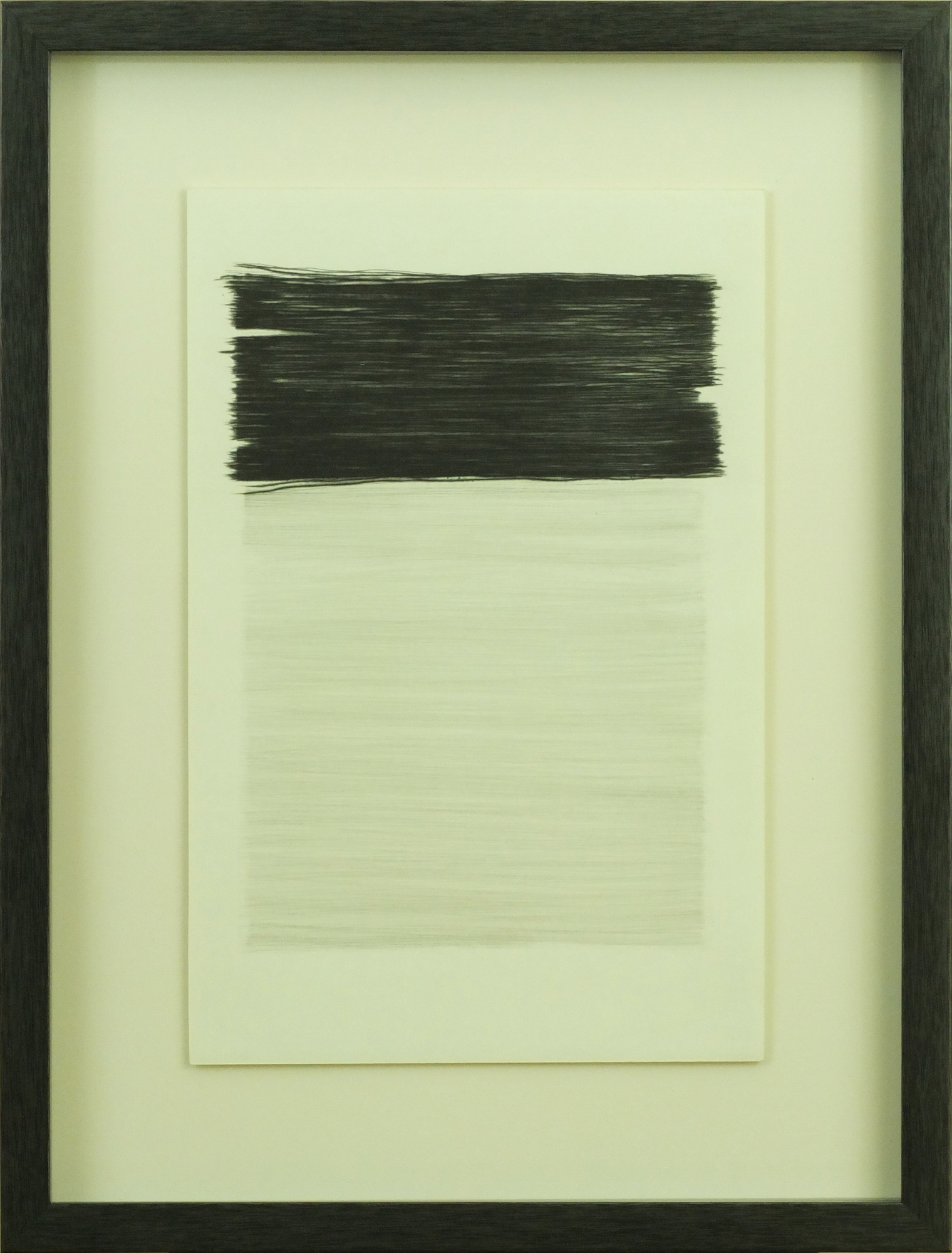
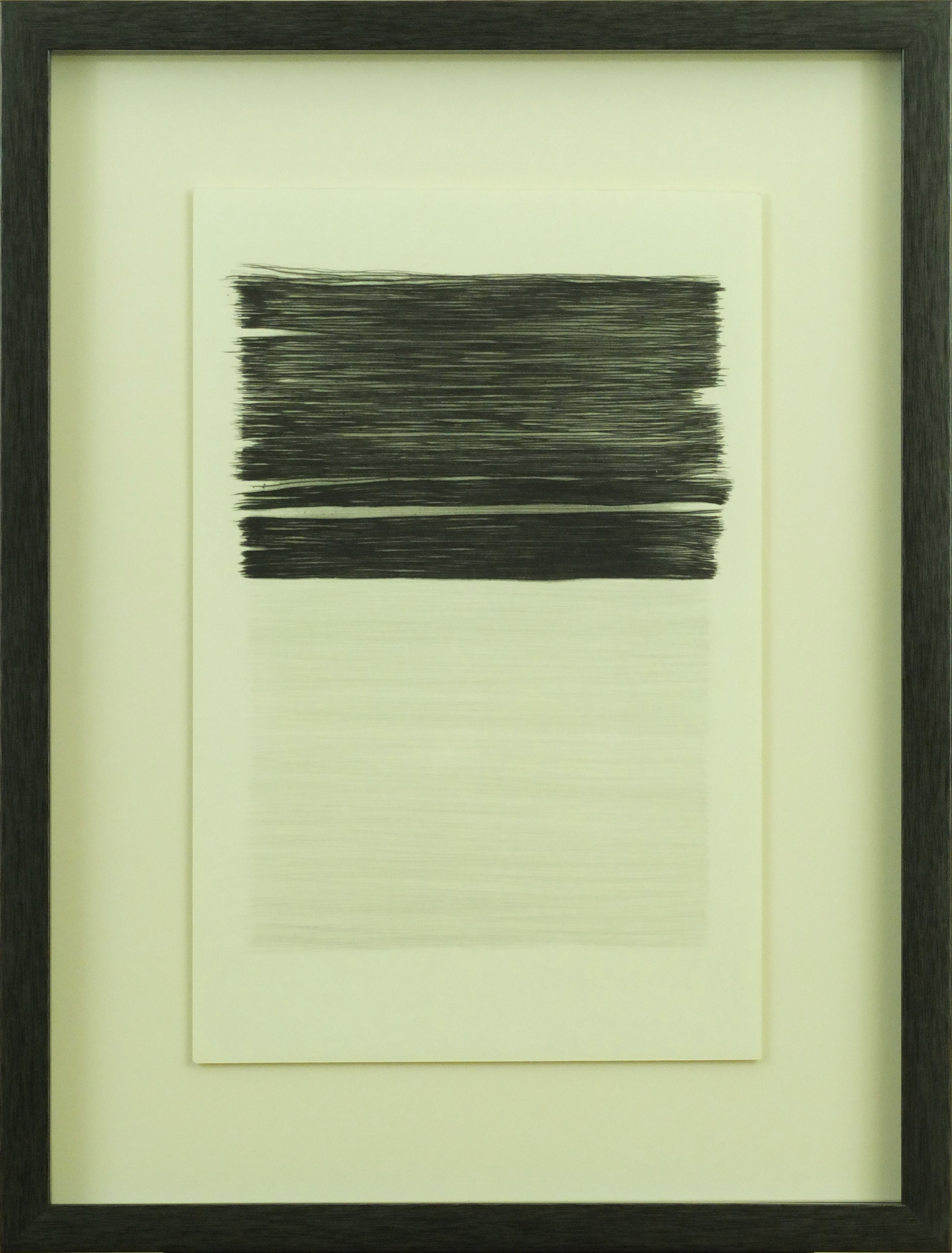
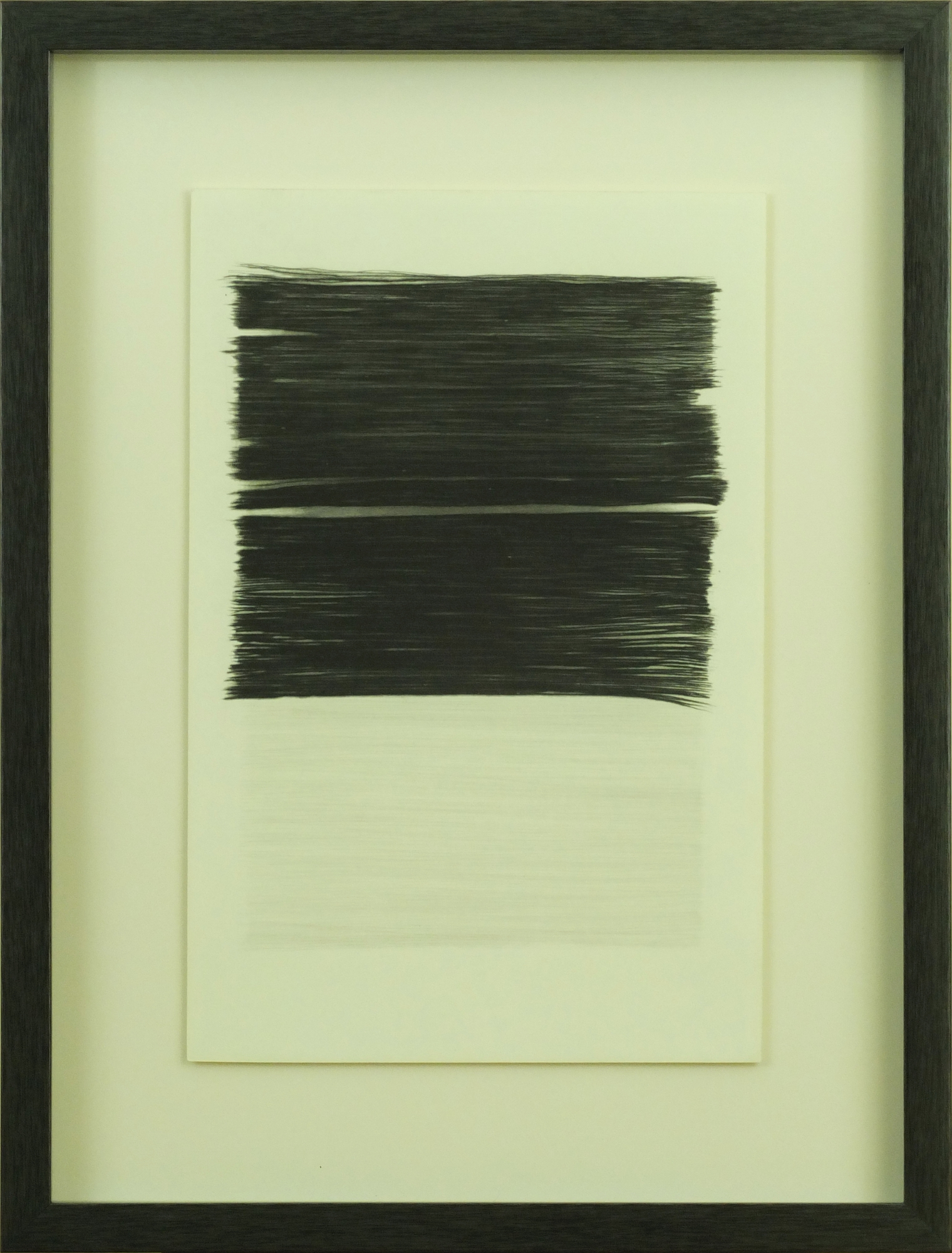
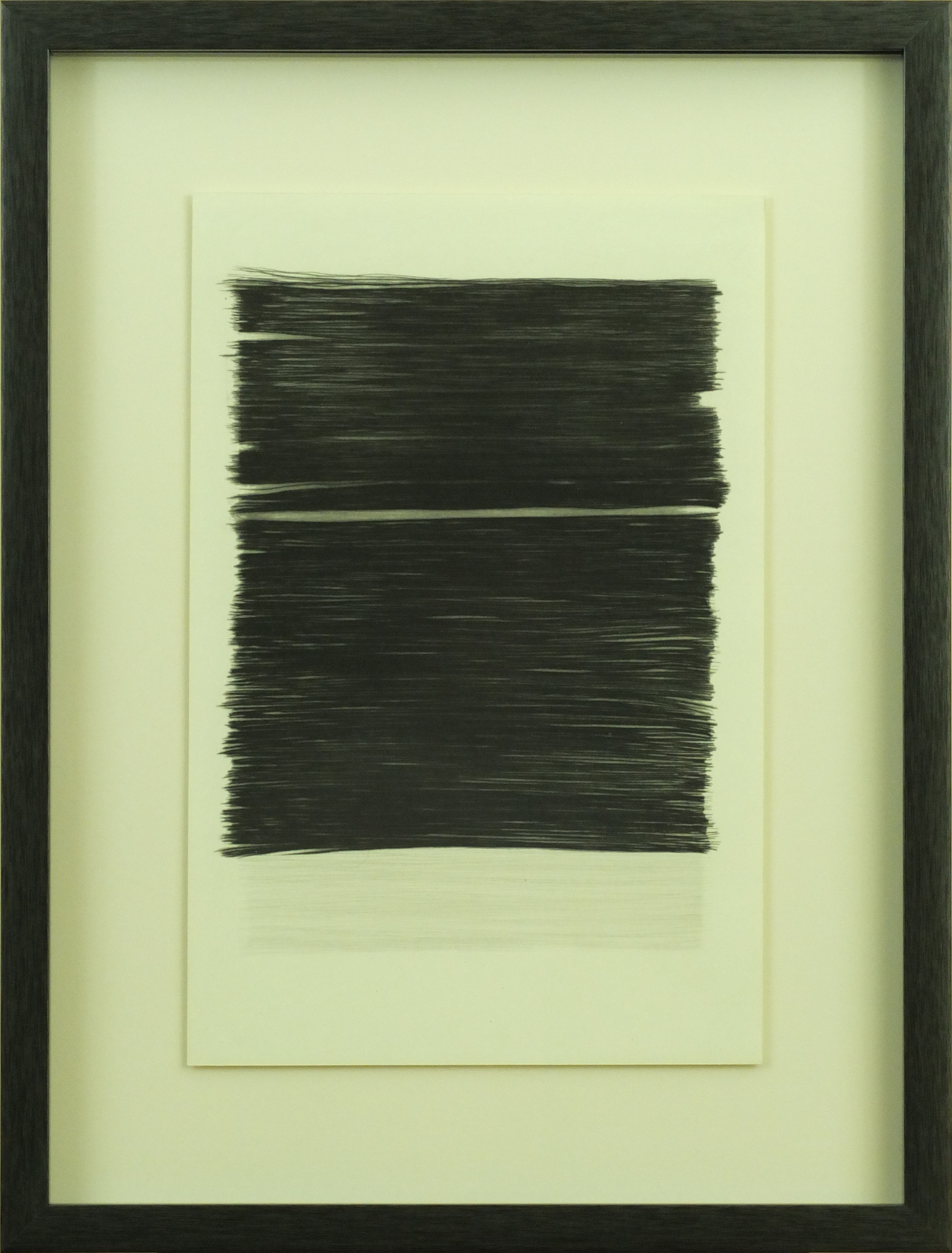
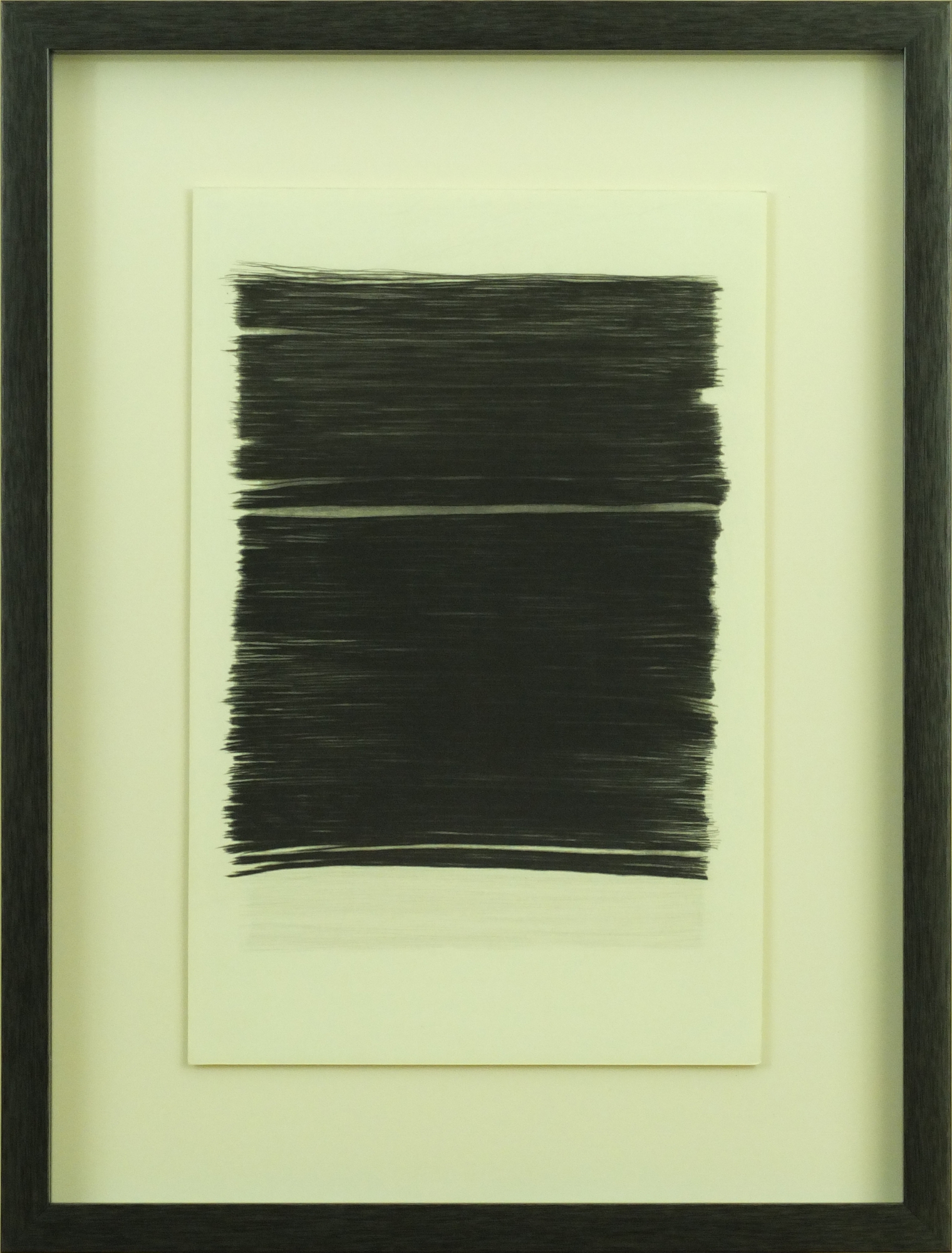
To me, this is a very remarkable and important work. It is one set of three printed, with no other proofs in existence (or possible, anymore). One of the other sets is in the Biblioteca Sormani in Milan, and the last set is in the Metropolitan Museum of Art in New York (along with the plate). This work not remarkable and important because it is in the Met; but rather it is in the Met because it is remarkable and important.
Arranged in sequence, the prints represent the chronology of a painstaking detailed printmaking process, as well as the evolution and lifecycle of a physical entity, the plate, which can also be regarded as the “brush” for this work. But the title suggests that the prints also represent a spiritual journey through the celestial spheres of Heaven, or perhaps any spiritual journey. So when I look at the overall piece, I see these ideas superimposed and intertwined and inextricable—the passage of time, endeavor and accomplishment, exaltation and sublimation—simultaneously drawing from, and inspiring, each other. I, at once, see states of being, as well as a stream of mysteries.
Are the in-between states part of the work as well? What about the states before the first impression was made, or after the last print was made and the plate retired?
And what if the prints were to be arranged in a different order? Would that disrupt the journey, and break up the work; or would that depict a new transcendent path through the heavens? Are there an infinity of such transcendent paths?
Where is the empyrean within this work? Or is it never shown? Or not yet arrived at?
I’m sure that clues to some of the possible understandings are with the artist. I may find out more from Raphael over the course of our interactions, either by asking (if or when it feels right) or as part of the natural flow of the conversation. Or I may not. Some of the clues may be in the Metropolitan Museum, with the plate—which in all likelihood I may never get to see. But, however many or however few of these clues come my way doesn’t really matter to me. I believe that the most important understanding of this work—whichever copy, in whichever arrangement—will always be in the mind and the spirit of the beholder.
* Some would say there are no answers in art, and I might agree if I thought that that meta-question could be answered, or even addressed…ad infinitum.
** A quick note on terminology: some sticklers actively refuse to associate the term “drypoint” directly with either “etching” or “engraving”, claiming that it is a completely distinct technique. However, it is quite natural, and also relatively common, to say “drypoint etching” or “drypoint engraving technique”, since drypoint has elements of both etching and engraving (lowercase “e” in both cases). So, I accept, and even embrace, either compound description, stickler-istic definitions be damned. [The irony here is that I am such a sticker about many things, but in the case of drypoint here, and monotype vs. monoprint previously, I have specific and defensible reasons to flout the stickler party line.]


I believe that Lei has answered the many questions himself in this dramatic and clear essay. I would like to add that the title for “Paradiso” came to me while re-reading Dante’s Divine Comedy. The plate was prepared with soft ground and then I started drawing very delicate lines, almost barely touching the plate with an etching needle. Afterwards, I etched the plate for 30 seconds in pure ferric chloride solution. One proof was made, and then the edition of 3 copies. A few days later I started the top lines. Even though the plate had no ground, the burrs were deep enough to leave a good impression. In all, 4 proofs were printed and destroyed at the end of the work; yes, some people are horrified by this, but I would be horrified to know that some of my work was less than perfect. What is important to me is the epiphany of the visible light and the reaction of the soul that matters; the great silence that envelops the whole work like an orchestra. Aside from philosophy, music also plays an important role in my work and discovering the dimension of the sacred space. Just like a musical composition, the work must be seen in sequence to be fully appreciated.