Dune Acres, 1991
I will now introduce the second set of three drawings by Virginio Ferrari that I was able to acquire as a result of the quest I outlined in the last posting. These are from a series of colored charcoals that he calls “Dune Acres”, which were done in 1991, while working from Dune Acres, Indiana (on the southern shore of Lake Michigan). They are each additionally subtitled “Tre Forme”; I don’t recall whether there are other works from the same series that I saw with a different number of forms as the subject.
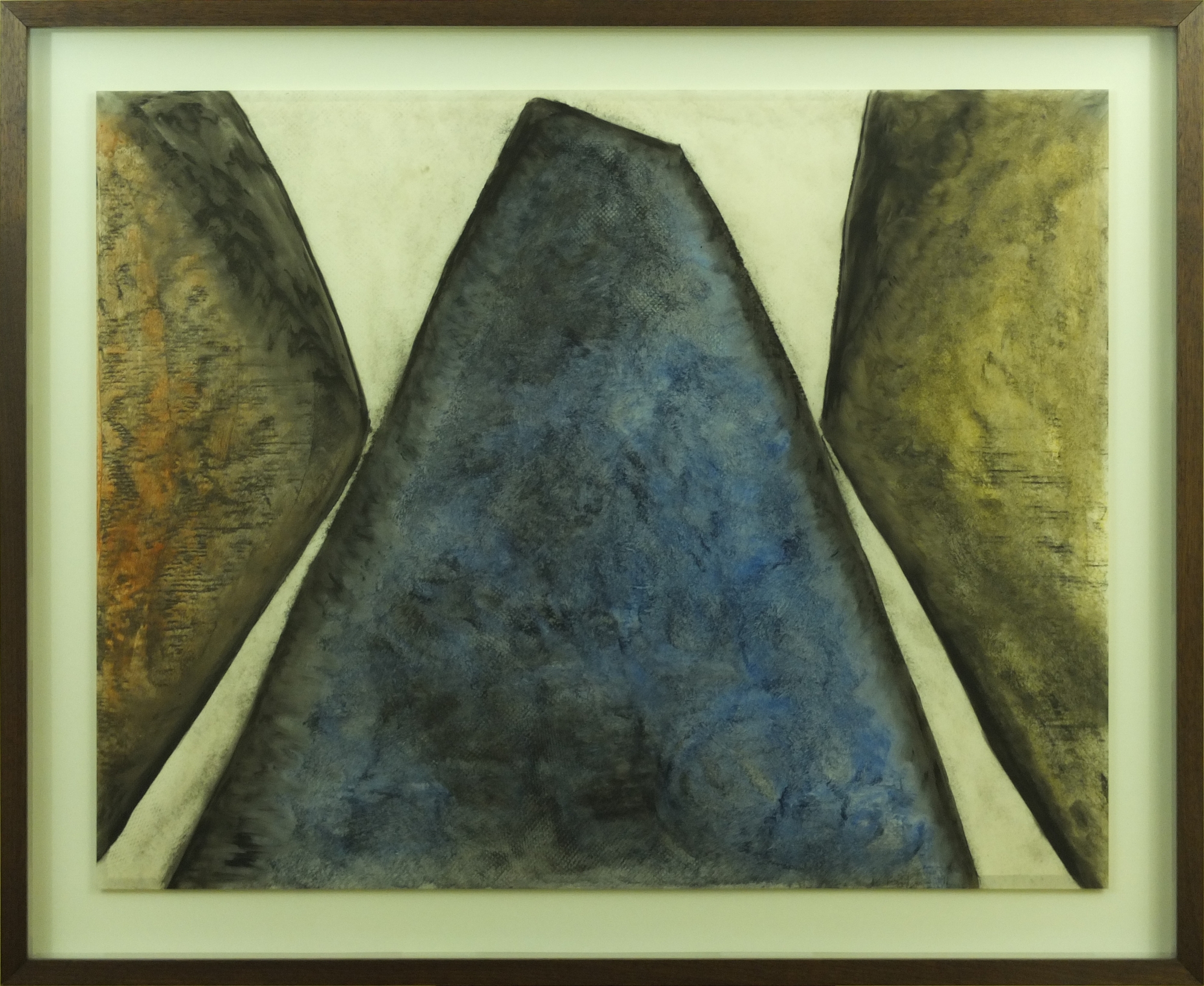
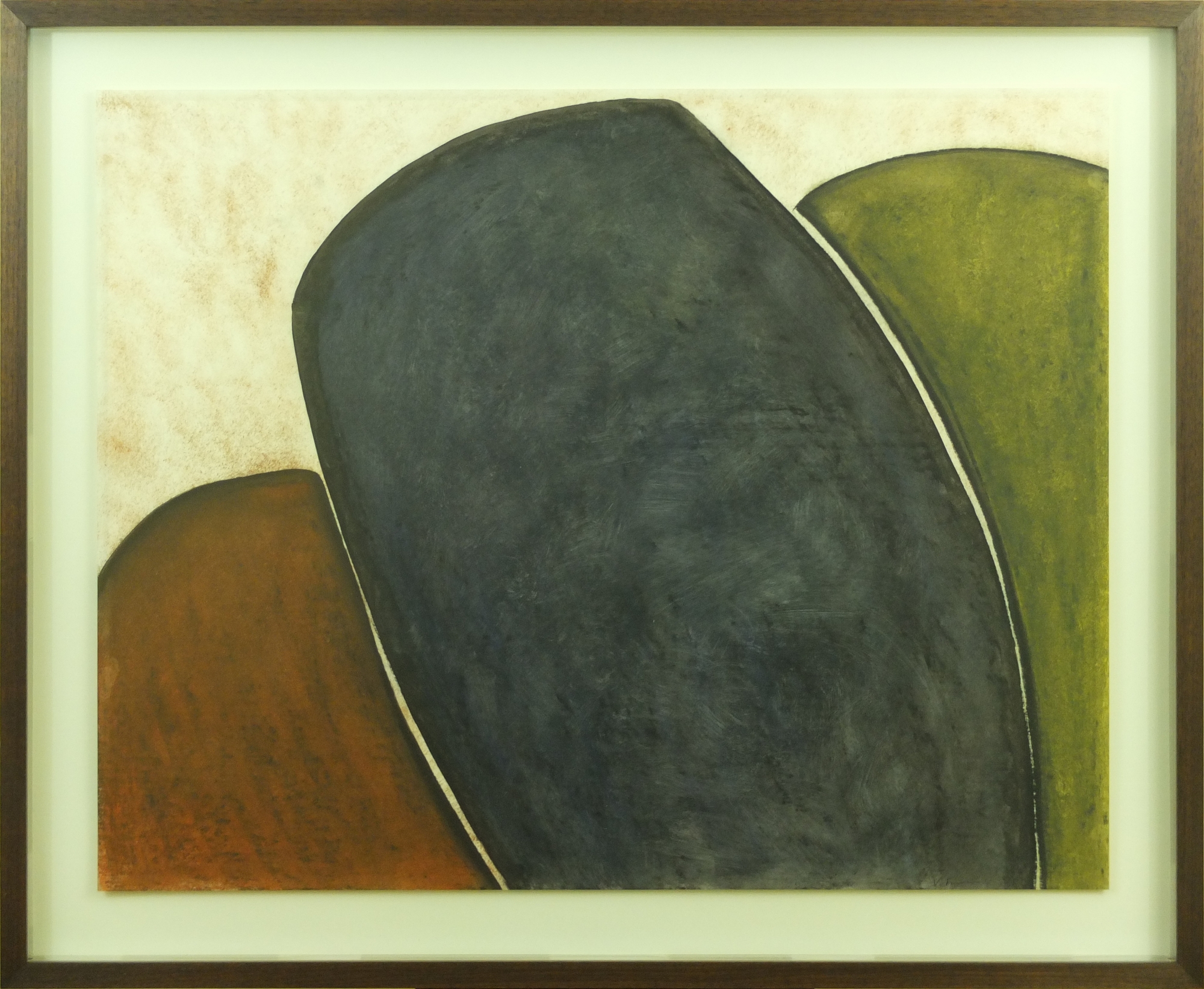

The first two in this set are 29″ x 23″ (framed out to 34″ x 28″) and are drawn on vellum. The third one (not shown to proper relative scale here) is wider at 36-1/2″ x 18″ (framed out to 42″ x 23″) and is done on paper.
Unlike many of the other works on paper that I had the pleasure and the privilege of browsing through in the studio (a little more on those, below), these drawings are fully executed and polished works. The colors and the shadings, in the shapes and in the backgrounds, are expressively stroked and textured. The geometry and stance of each of the forms depict a distinct character, and the interactions between the players are dramatic and provocative and, I believe, even narrative. There are other really nice pieces from this series (done in both formats mentioned above, and perhaps others), which explore additional aspects of color, shape, and interaction.
Collective Works of Virginio Ferrari
In addition to the Gestos and Dune Acres series of drawings that I have introduced in these last two posts, I have seen a number of other different styles of drawing and paintings done by Virginio Ferrari, spanning many years and periods of his art. However, Mr. Ferrari’s primary creative output (and subject of renown) is his sculpture, so I think his most important works on paper are those that refer directly to his sculptural pieces and/or process. There are early sketches in which you can see the germination of sculptural forms, there are studies and variations on forms that have been more concretely developed, and there are completed representations of specific, readily identifiable public and private pieces. They cover the range from loose impromptu sketches to careful technical drawings that specify final (or hear-final) forms for construction and/or installation.
Many of his individual drawings or paintings work as stand-alone pieces of art, worthy of displaying and collecting. Many of them also work as part of a set of closely related items, creating an even greater impression when viewed together, or in some arrangement with one another. But the most significant way of considering his works on paper, is as a collective whole. They reflect a long and ongoing sequence and journey of viewpoint and reflection, of creation and re-creation, of experience and progression to new ideas and new expressions and new stages in a life and in a career. I have been fortunate enough to see, and spend time with, a number of Virginio Ferrari’s works, both sculptural as well as drawn/painted, assembled together (more than once, actually). Though I can’t collect all of the works, the ones that I do have are a token and a channel into a larger body of work that I admire and have long had personal connections with.
 semelinvita